Market Overview
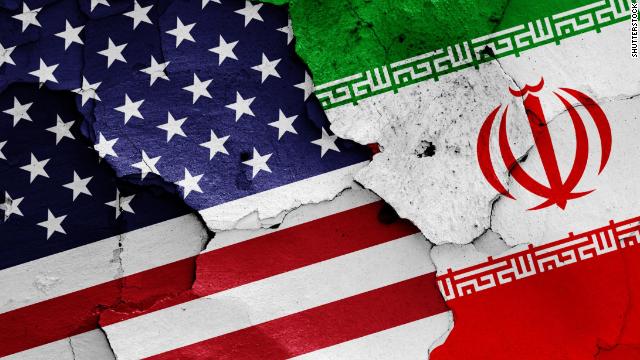
With roughly five weeks remaining in 2024, the prediction market on US military entry into Iran has stabilized at 99.3%, reflecting near-universal market conviction that no such operation will occur. The market has seen substantial trading activity, with $17.9 million in total volume, yet the probability has remained essentially flat over the past 24 hours. This consistency suggests a market equilibrium where participants have reached broad consensus on the baseline scenario.
The high probability assigned to \"No\" (the inverse of the 99.3% \"Yes\" quote) does not necessarily indicate strong bullish sentiment about peace; rather, it reflects the practical reality that a ground invasion of a nation of 90 million people would require extensive military mobilization, which leaves significant evidence in advance. No credible reporting has surfaced of such preparations.
Why It Matters
The resolution criteria are notably specific: only active US military personnel physically entering Iran's terrestrial territory qualify, explicitly excluding special operations advisors, diplomatic personnel, military contractors, and aerial or maritime incursions. This narrow definition means the market is capturing trader assessments of an actual military ground operation rather than the full spectrum of potential US-Iran military engagement. Recent regional tensions, including drone strikes, naval incidents, and proxy conflicts, do not directly trigger this market—only boots on Iranian ground would.
Key Factors
Several structural factors underpin the low \"Yes\" probability. First, a ground invasion would represent a dramatic escalation unprecedented in recent US-Iran relations and would require political decisions and military preparations that are currently absent from intelligence reporting. Second, the timeframe is compressed—only 35 days remain, leaving minimal window for the political mobilization and military logistics such an operation would demand. Third, the incoming US administration transition could create uncertainty about decision-making, but neither the current nor incoming leadership has signaled plans for such action.
Conversely, any significant shift in the market would likely stem from unexpected developments: a major terrorist attack attributed to Iran, a critical incident involving US allies, or unprecedented intelligence suggesting an imminent Iranian threat. The market's stability suggests participants view these tail-risk scenarios as appropriately priced into the remaining 0.7% probability.
Outlook
Barring a severe geopolitical shock, the probability is unlikely to move materially higher before year-end. The market structure—with most volume likely concentrated among early traders and steady-state pricing—suggests the current level reflects genuine consensus rather than active price discovery. Traders would need concrete evidence of military mobilization or a policy shift from Washington to shift the odds meaningfully. The market will resolve on January 1, 2025, based on credible reporting of whether any US military personnel physically entered Iranian territory during 2024.