Market Overview
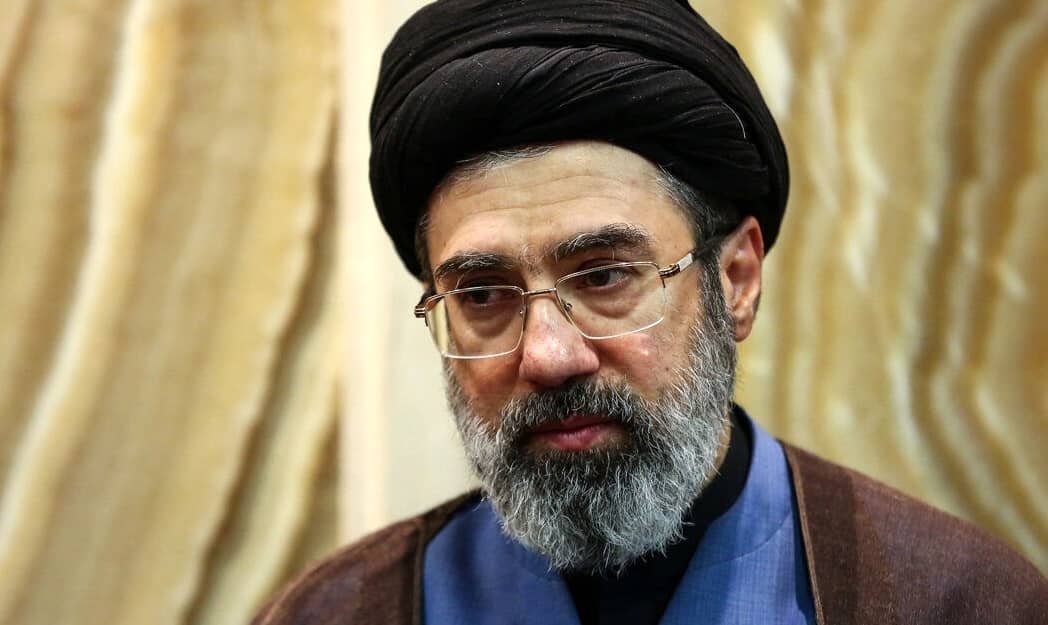
Prediction markets are currently assessing a one-in-three chance that Iran's de facto leadership will change hands before the year closes. With $2.1 million in volume and stable pricing at 33.5% over the past day, the market reflects meaningful but not dominant expectations of a leadership transition. The question specifically targets Mojtaba Khamenei—the son of former Supreme Leader Ayatollah Ali Khamenei and widely understood as his heir apparent—with \"Yes\" resolution triggered by removal from power, detention, loss of position, or any circumstance preventing him from exercising de facto leadership.
Why It Matters
Iran's leadership structure carries outsized geopolitical significance, with the Supreme Leader wielding substantial control over military, judiciary, and religious institutions. Any change in de facto leadership could signal major shifts in Iranian foreign policy, nuclear negotiations, regional military posture, or domestic governance. The market's probability level—roughly equivalent to a coin flip with one side slightly heavier—suggests traders view a transition as plausible but not probable within the specified timeframe, reflecting genuine uncertainty rather than either conviction or dismissal.
Key Factors
Several elements appear to underpin the current odds. Mojtaba Khamenei's age (approximately 55) and the advanced age of the current Supreme Leader (92) create succession planning considerations, though formal power transfer remains opaque. Domestic political tensions in Iran—including factional disputes between hardline and reformist camps—could theoretically accelerate transitions, but no imminent crisis is widely reported. International pressure, including sanctions and nuclear negotiations, adds uncertainty to Iran's political stability calculus. The resolution criteria's breadth—encompassing removal, detention, or loss of de facto authority—casts a wider net than formal resignation alone, potentially capturing less visible power shifts.
Outlook
The market's stability at one-third probability suggests traders are pricing in genuine structural uncertainty rather than reacting to specific breaking news. Developments that could shift odds include major health events affecting current or prospective leaders, significant escalation in regional conflicts affecting Iran's political dynamics, substantial changes in factional power balance, or explicit succession announcements. Conversely, prolonged stability and consolidation of Mojtaba Khamenei's position could gradually compress the probability lower. The timeframe—roughly nine months from typical market creation—provides sufficient window for political change while remaining short enough that most transitions would require triggering events rather than gradual succession planning.