Market Overview
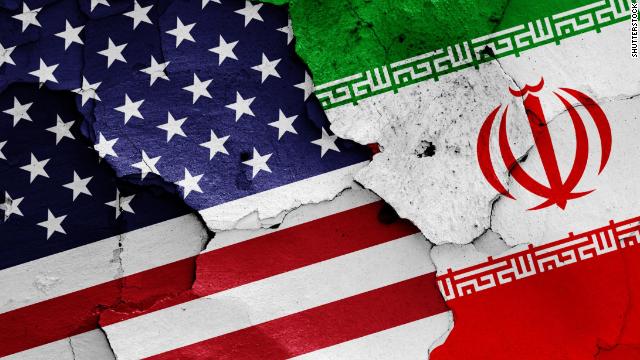
The prediction market on potential US military entry into Iran shows overwhelming confidence in the status quo, with traders pricing the probability of active US military personnel physically entering Iranian territory by year-end at just 0.7%. The market has maintained this probability consistently over the past 24 hours, with substantial liquidity at $17.9 million in volume, suggesting broad agreement among participants that a direct ground invasion is not a realistic near-term scenario.
Why It Matters
The question specifically targets a high threshold of military action—actual physical presence of active-duty US forces on Iranian soil—while excluding diplomatic missions, special operations intelligence work, and military contractors. This distinction matters because it essentially asks whether the US would undertake a major conventional military invasion, a fundamentally different scenario from airstrikes, cyber operations, covert activities, or diplomatic engagement. The market's confidence reflects the substantial barriers to such action, including potential regional instability, international diplomatic fallout, and the operational complexity of a ground campaign against a nation of 90 million people.
Key Factors
Several factors support the market's assessment. The US currently maintains significant military presence throughout the Middle East via bases in Iraq, the UAE, and the Gulf, but has not formally mobilized for an Iran invasion despite decades of bilateral tensions. Recent administrations have pursued alternative strategies—from the 2015 nuclear agreement to maximum pressure sanctions campaigns and targeted strikes. The high political and military cost of an invasion, combined with the availability of other coercive tools, has consistently made ground operations unattractive to US policymakers. Additionally, the timeframe is limited to roughly one month from present, leaving minimal window for the massive military mobilization such an operation would require.
Outlook
For the market to shift materially from its current pricing, a dramatic escalation would be necessary—such as a major terrorist attack definitively attributed to Iran, a direct Iranian military strike on US interests, or a significant shift in US political leadership accompanied by immediate military action. Short of such a shock, the market's near-certainty of no ground invasion appears well-calibrated to the current geopolitical reality. Traders should monitor regional incidents closely, but absent extraordinary developments, the 99.3% probability likely reflects a stable equilibrium through year-end.