Market Overview
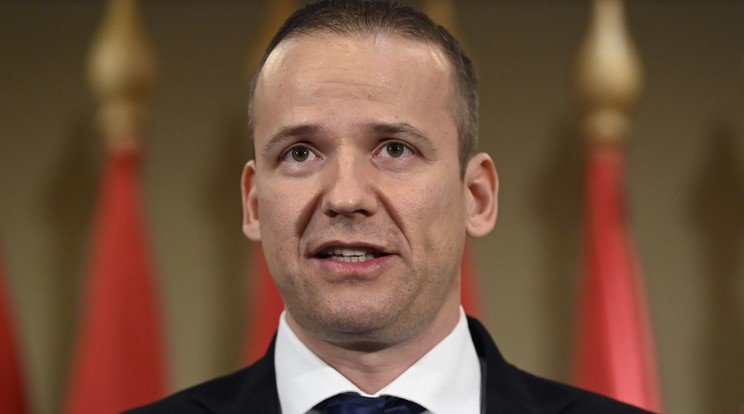
With approximately 16 months until Hungary's scheduled April 12, 2026 parliamentary elections, prediction markets have priced László Toroczkai's path to the premiership at 0.1%—effectively treating his candidacy as a near-certain non-event despite substantial trading volume of $12.8 million on the question. The negligible odds have remained flat over the past 24 hours, suggesting market consensus has solidified around a stark assessment of Toroczkai's viability. The market structure requires formal election and appointment by December 31, 2026, excluding any interim or caretaker arrangements.
Why It Matters
Toroczkai leads Mi Hazánk (\"Our Homeland\"), a far-right party that has positioned itself to the right of Prime Minister Viktor Orbán's Fidesz party on nationalist and immigration issues. His potential candidacy represents a test of whether Hungary's fragmented opposition and right-wing political landscape could produce a non-Orbán successor—a significant question for EU-Hungary relations and democratic governance in the bloc. The market's extreme confidence that Toroczkai will not lead the next government reflects judgments about coalition mathematics, party strength, and political feasibility that deserve scrutiny as election season approaches.
Key Factors
Orbán's Fidesz party remains Hungary's dominant political force, having governed continuously since 2010 and commanding substantial parliamentary representation. Even if Fidesz loses its parliamentary majority, coalition-building dynamics favor established parties with deeper institutional roots and EU relationships over Mi Hazánk, which remains a relatively young challenger. Toroczkai's party, while vocal in opposition to immigration and EU policies, has limited parliamentary experience and faces the structural challenge that Hungarian coalition negotiations typically exclude parties deemed beyond the pale by international partners. Additionally, if Fidesz or its allies retain a majority, Orbán or a Fidesz-designated successor becomes nearly certain, further diminishing Toroczkai's odds. The market's 0.1% assessment may also reflect betting markets' typical difficulty pricing extremely low-probability outcomes, where small absolute probabilities become pricing boundaries.
Outlook
For Toroczkai's probability to move materially higher, three improbable developments would need to occur: Fidesz's near-total electoral collapse, a successful far-right consolidation among Hungarian voters that marginalizes other opposition blocs, and international acceptance of a far-right PM—none of which current polling or coalition arithmetic suggests is likely. Conversely, the probability could edge marginally higher if Mi Hazánk significantly outperforms expectations in upcoming Hungarian politics or polling, though such shifts would likely move his odds to perhaps 0.5-1% rather than triggering a fundamental reassessment. Market participants appear confident enough in their assessment to leave the odds at their effective floor, suggesting little expectation of major developments favoring Toroczkai before April 2026.