Market Overview
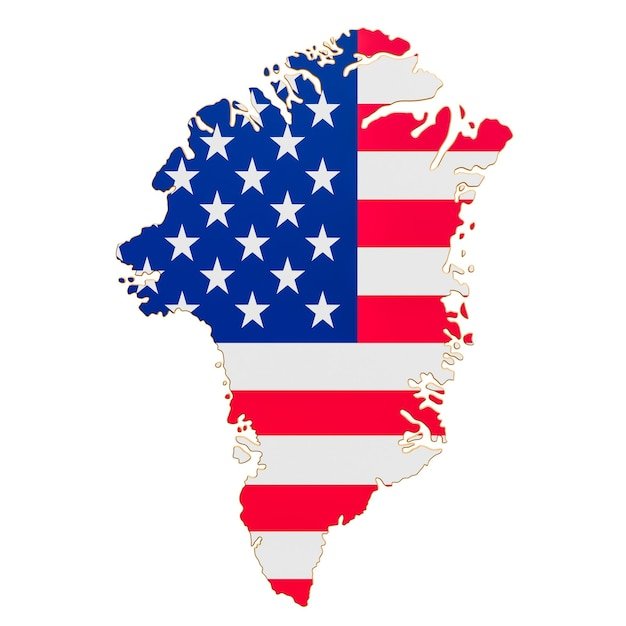
The prediction market on U.S. acquisition of Greenland territory has stabilized at 14% probability, with trading volume exceeding $9.6 million indicating sustained investor interest in the outcome. The market defines qualification narrowly: only a binding agreement or legal instrument establishing either full sovereignty transfer or exclusive U.S. jurisdiction would resolve the market to \"Yes.\" Non-binding proposals, lease agreements, or basing rights do not qualify, setting a high bar for resolution.
Why It Matters
The question reflects real geopolitical developments following statements from U.S. political figures regarding strategic interest in Greenland. The island's geographic position in the Arctic, proximity to Russia, and mineral resources have elevated its strategic importance in great power competition. However, Greenland is an autonomous territory of Denmark, a NATO ally, making any territorial acquisition extraordinarily complex diplomatically and legally. The 14% probability implies market participants view such an outcome as unlikely but non-negligible within a two-year timeframe.
Key Factors
Several structural obstacles constrain the probability. Denmark retains sovereignty and foreign policy authority over Greenland under the Kingdom of Denmark framework, and any transfer would require Danish and Greenlandic consent through their constitutional processes. Both have firmly rejected acquisition proposals. The narrow resolution criteria—requiring binding legal instruments rather than announcements or negotiations—eliminates scenarios involving preliminary agreements or frameworks. Additionally, the market extends only through December 2026, limiting the window for what would be a historically unprecedented transaction involving a NATO ally's territory. The moderate trading volume and stable probability suggest the market has priced in base-case geopolitical risk without anticipating imminent breakthrough negotiations.
Outlook
Significant developments would be required to shift the probability materially. An unexpected change in Danish or Greenlandic political leadership favoring territorial discussions, major strategic shifts in Arctic security, or an explicit bilateral negotiating framework would likely move odds higher. Conversely, strengthened public statements from Copenhagen and Nuuk reaffirming territorial integrity, or U.S. policy pivots away from acquisition rhetoric, could compress probability further. For now, the market appears to be pricing Greenland acquisition as a tail risk—geopolitically relevant but institutionally constrained and unlikely in the specified timeframe.