Market Overview
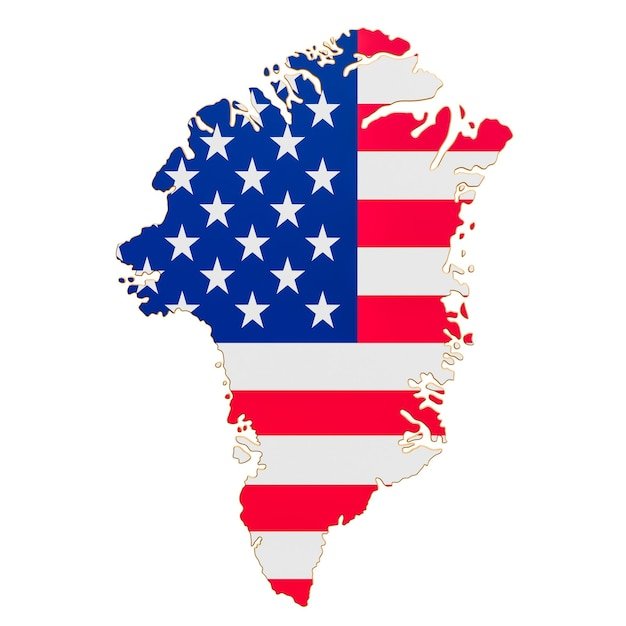
A prediction market on U.S. acquisition of Greenlandic territory is currently trading at 14% probability, with roughly $9.7 million in volume. The market resolves affirmatively only if the U.S. secures formal sovereignty, primary jurisdiction, or exclusive control over defined Greenlandic land through binding legal instruments—including treaties, legislation, or executive actions—by December 31, 2026. Mere announcements, non-binding proposals, or service agreements do not qualify; the resolution criteria explicitly exclude basing rights, leases, and memoranda of understanding without legal force.
Why It Matters
The question captures interest in a decades-old strategic concept that has resurged in U.S. policy discourse. Greenland's geographic position in the Arctic, its natural resources, and its proximity to major shipping routes and Russian territory make it geopolitically significant. Recent U.S. political figures have publicly raised the prospect of acquisition, elevating a historically fringe idea into mainstream consideration. The market's 14% probability suggests traders view the outcome as unlikely but plausible within the two-year window, reflecting both genuine policy interest and the formidable institutional and diplomatic barriers to territorial acquisition.
Key Factors
Several structural factors constrain the probability. Denmark, which maintains sovereignty over Greenland, has firmly rejected any territorial transfer. Greenland's Home Rule government and its path toward independence complicate the picture—independence advocates may resist both Danish negotiation of their territory and U.S. acquisition. International law and norms against territorial acquisition absent consent create diplomatic obstacles. The resolution criteria's requirement for binding legal instruments—not mere statements—means speculative political rhetoric does not move the needle. Conversely, factors that could raise the probability include sustained geopolitical tension with Russia elevating Arctic strategy in U.S. calculations, economic incentives to Greenland or Denmark, or a shift in Greenlandic independence politics that creates new negotiating dynamics. The timeframe of two years is relatively short for executing formal territorial transfers, which typically require lengthy legislative and diplomatic processes.
Outlook
The 14% probability appears calibrated to reflect real but constrained probability. It is higher than zero because geopolitical interest is documented and acquisition has non-zero probability paths, yet it remains low given the absence of active negotiations, clear Danish and Greenlandic opposition, and the binding legal instrument requirement. The market will likely remain sensitive to statements from U.S. officials, changes in Greenland's political status, or shifts in great-power competition in the Arctic. Absent substantial movement in diplomatic channels or formal negotiation announcements, the probability may persist in a similar range through 2026.