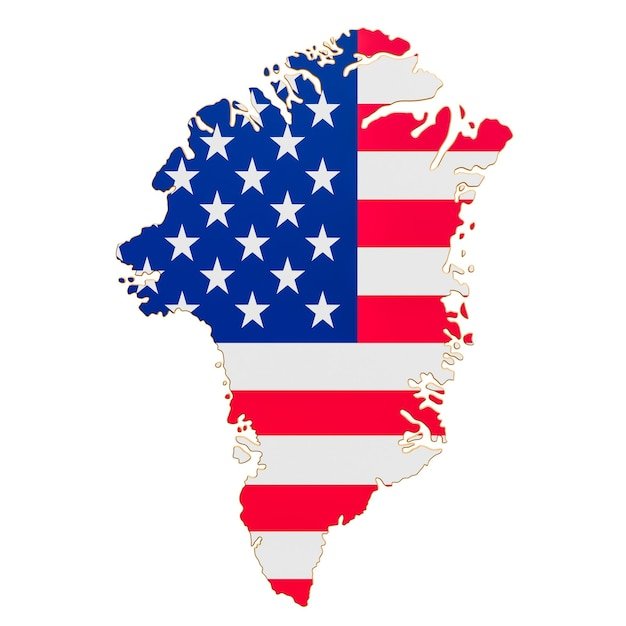
Market Overview
Prediction market participants are currently assigning a 14% probability to the United States acquiring control of any land territory that is part of Greenland by December 31, 2026. With $9.7 million in trading volume, the market reflects genuine uncertainty around a scenario that remains largely in the realm of political discussion rather than formal negotiation. The probability has remained stable over the past 24 hours, suggesting the market has already priced in available information and is awaiting concrete developments to shift sentiment materially.
Why It Matters
The question of U.S. territorial acquisition in Greenland touches on fundamental issues of sovereignty, Arctic geopolitics, and international law. Any actual transfer would require binding legal instruments—whether through treaty, legislation, or executive agreement—establishing either formal sovereignty transfer or primary U.S. jurisdiction over defined territory. The market's relatively low probability reflects the current reality: while U.S. interest in Greenland has been publicly discussed, no formal negotiations, legislation, or binding agreements toward such an outcome have materialized. The resolution criteria are deliberately stringent, excluding non-binding statements, proposals, or basing agreements, which means the bar for a \"Yes\" outcome is substantial.
Key Factors
Several structural factors constrain the probability. Denmark retains sovereignty over Greenland as an autonomous territory within the Danish realm, and both Danish and Greenlandic governments have repeatedly rejected the notion of territorial sale or transfer. For any acquisition to occur within the 24-month timeframe, it would require either a dramatic shift in political positions among these actors or, theoretically, military force—an outcome the market appears to treat as extremely unlikely. The legal complexity is also significant: establishing \"primary or exclusive jurisdiction\" (as outlined in the resolution criteria) while respecting existing sovereignty would require unprecedented diplomatic and legal innovation. Additionally, U.S. domestic political constraints matter; even with executive interest, Congressional approval would likely be necessary for meaningful territorial acquisition, adding legislative friction.
Outlook
The stability of the 14% probability suggests the market is in a holding pattern, waiting for moves beyond rhetoric. Near-term catalysts that could shift odds upward would include formal diplomatic negotiations, legislative proposals with substantive backing, or executive actions toward binding agreements. Conversely, explicit statements from Danish or Greenlandic officials categorically rejecting discussions, or the passage of time without meaningful progress, could push the probability lower. Given the 24-month window remaining and the absence of current concrete steps toward acquisition, the market appears to be pricing in a scenario that, while not impossible, requires significant and rapid shifts in geopolitical alignment and international law interpretation.


