Market Overview
The Digital Asset Market Clarity Act (H.R. 3633) is currently trading at 46.5% probability of passage and presidential signature by December 31, 2026, according to prediction markets tracking the legislation. The slight uptick over the past 24 hours—from 43.5% to 46.5%—signals marginal confidence gains among market participants, though odds remain nearly even. With $559,765 in trading volume, the market reflects moderate but meaningful engagement from investors betting on cryptocurrency regulation's trajectory.
Why It Matters
The Clarity Act represents one of the most significant attempts at comprehensive digital asset legislation in recent years. If enacted, it would establish clearer regulatory frameworks for cryptocurrencies, stablecoins, and related assets—a goal long sought by industry participants and institutional investors seeking legal certainty. The bill's passage would reshape how exchanges, custodians, and issuers operate domestically and potentially influence global regulatory standards. For crypto markets, regulatory clarity historically correlates with reduced volatility and increased institutional participation, making this outcome material to the sector's trajectory.
Key Factors
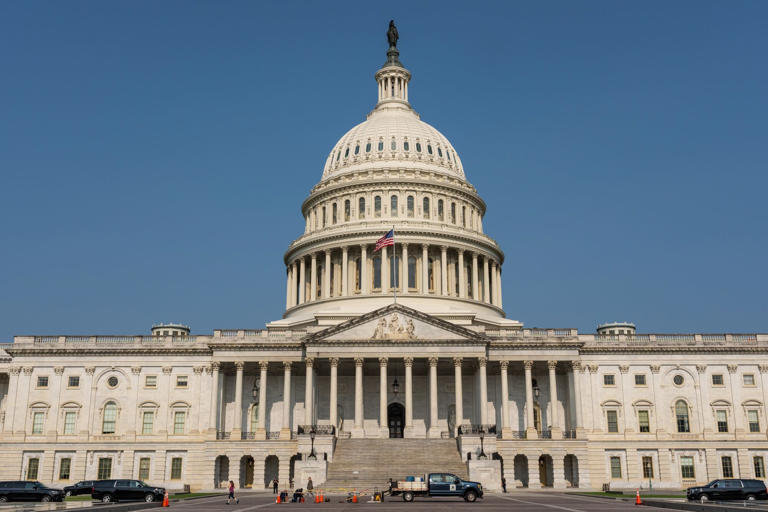
Several elements drive current market pricing. Congressional composition matters significantly: the 119th Congress holds the legislation, and political alignment on crypto has shifted in recent years, with both parties showing increased openness to reasonable frameworks. However, passage requires consensus across parties and chambers—a high bar for any contentious legislation. The 24-month window extends through the end of 2026, providing ample procedural time, though competing legislative priorities and midterm election cycles could delay or derail progress. Market sentiment appears balanced between optimism about industry momentum and skepticism about the speed of legislative action in a divided or distracted Congress.
Outlook
The near-50% odds reflect genuine uncertainty. Catalysts that could increase probability include formal committee votes advancing the bill, bipartisan co-sponsorship announcements, or high-profile industry advocacy. Conversely, competing financial regulation priorities, crypto market instability, or ideological opposition could reverse recent gains. Given the legislation's scope and the typical pace of financial regulation, markets may continue pricing this as a genuine toss-up through 2026, with material price movement likely tied to concrete congressional action rather than market sentiment alone.