Market Overview
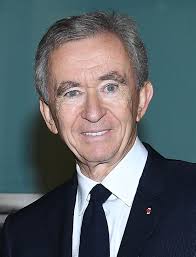
Bernard Arnault, the French luxury goods magnate who has alternated with Elon Musk atop global wealth rankings in recent years, commands only a 1.1% probability of holding the world's richest person title on the final day of 2026. The prediction market, which has maintained this probability over at least the past 24 hours and has generated $362,312 in trading volume, reflects the inherent difficulty of forecasting wealth rankings two years into the future, where asset price movements and exchange rate fluctuations can dramatically reshape relative positions.
Why It Matters
The identity of the world's richest person serves as a barometer of wealth concentration, shifts in industrial power, and the relative performance of different asset classes and geographies. Whether Arnault, Musk, or another billionaire tops the rankings carries symbolic weight for perceptions of European versus American business dominance, the valuation of luxury goods versus technology, and the stability of dynastic wealth versus entrepreneurial fortunes. For market participants, accurately pricing the probability of Arnault's top-spot finish requires assessing not only LVMH's stock performance but also the trajectories of competitors' net worth across an extended forecast window.
Key Factors
Arnault's path to the top ranking depends on several convergent conditions. LVMH shares must appreciate substantially or remain stable while competitors' assets decline, a scenario that becomes less likely as the forecast horizon lengthens. Elon Musk's Tesla holdings, which have dominated his net worth, remain highly volatile and sensitive to company execution, regulatory environment, and market sentiment around electric vehicles. Other contenders—including Jeff Bezos, Larry Ellison, and rising technology fortunes—could also gain ground. Currency movements matter significantly for Arnault, whose wealth is denominated partly in euros. The luxury sector's performance relative to technology is a fundamental driver; sustained outperformance by LVMH could narrow the gap, but technology has been the dominant wealth-creation engine for the past two decades. The 1.1% probability suggests the market views Arnault's return to the top as unlikely but not impossible, reflecting a baseline expectation that he will remain among the top three billionaires but not claim the crown.
Outlook
Market participants should monitor quarterly earnings from LVMH, Tesla share price trends, and broader equity market sentiment as signals that could shift these odds over the coming quarters. A sustained decline in tech valuations combined with strong luxury sector growth could incrementally improve Arnault's probability. Conversely, continued strength in technology stocks and competitive pressure on luxury margins would likely push the probability lower. The two-year resolution window means the market is pricing in a high degree of uncertainty and volatility; unlike near-term prediction markets, this forecast relies on extrapolating current trends across an extended period where black-swan events or strategic changes could substantially alter outcomes.


