Market Overview
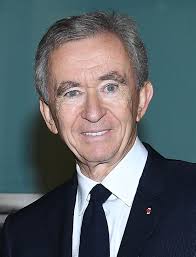
Bernard Arnault, the French luxury goods magnate and controlling shareholder of LVMH Moët Hennessy Louis Vuitton, is priced at just 1.1% to top the Bloomberg Billionaires Index on the final day of 2026. The market has remained stable at this probability for at least 24 hours, with substantial trading volume of $362,312 suggesting active participation despite the long-shot odds. The question hinges on real-time wealth rankings as of December 31, 2026, 5:30 PM ET, using Bloomberg's methodology as the primary source.
Why It Matters
Arnault's position in the global wealth hierarchy carries implications beyond personal fortune—his ranking affects perceptions of European business dominance and the luxury sector's economic weight. LVMH's performance directly influences his net worth, making this market a proxy for investor sentiment on the luxury goods industry's trajectory through 2026. The extremely low probability assigned to Arnault suggests consensus skepticism about his ability to outpace competitors, despite his historical prominence in billionaire lists. Understanding why markets discount his chances illuminates the current competitive landscape among ultra-wealthy individuals.
Key Factors
Arnault's wealth is heavily concentrated in LVMH, a company sensitive to macroeconomic conditions, currency fluctuations, and consumer spending trends—particularly in Asia where luxury demand is concentrated. His ability to reclaim the top spot depends not only on LVMH's stock performance but also on whether competitors' wealth grows faster or slower over the 12-month period. The billionaire rankings are extraordinarily fluid, driven by stock price movements, real estate valuations, and cryptocurrency holdings among other factors. Elon Musk, Jeff Bezos, and other contenders have experienced dramatic swings in recent years, and the 1.1% probability reflects betting markets' assessment that Arnault is unlikely to be the net beneficiary of 2026's wealth shifts compared to his peers.
Outlook
For Arnault to meaningfully improve these odds, LVMH would need to substantially outperform broader market expectations while competitors experience relative wealth contractions. Major catalysts could include strategic acquisitions, significant luxury sector consolidation, or macroeconomic conditions that disproportionately boost LVMH's valuation relative to technology, finance, and other wealth-generating sectors. Conversely, a broader market downturn concentrated in luxury goods or French equities could further compress his probability. Markets will likely reassess these odds periodically as new company earnings, market conditions, and wealth data emerge through year-end 2026.