Market Overview
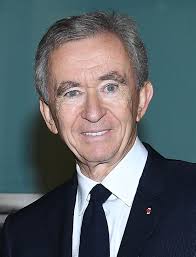
Bernard Arnault, the French luxury goods magnate and chairman of LVMH Moët Hennessy Louis Vuitton, faces extremely long odds of reclaiming the top spot on the Bloomberg Billionaires Index by year-end 2026. The prediction market currently prices his chances at just 1.1%, suggesting traders view his path to the world's richest person title as highly unlikely over the next roughly 12 months. This represents a slight decline from 1.3% a day prior, though the low absolute probability and modest trading volume of $362,000 indicate limited conviction in either direction.
Why It Matters
The identity of the world's richest person carries outsized attention in business and media circles, serving as a proxy for broader trends in wealth concentration, sectoral performance, and the relative fortunes of different business empires. Arnault's position in this market is particularly notable given his historical prominence—he has traded places with Elon Musk for the top ranking multiple times in recent years, demonstrating how volatile billionaire wealth rankings can be. The current low probability attached to Arnault suggests that investors believe other contenders, particularly those with exposure to technology and capital markets, are better positioned to hold the number-one ranking as 2026 closes.
Key Factors
Several structural factors weigh against Arnault's prospects. His wealth is concentrated in LVMH, a luxury conglomerate whose valuation is sensitive to consumer spending cycles and macroeconomic sentiment. Technology sector leaders, by contrast, benefit from equity markets that have historically rewarded growth stocks and are less correlated with discretionary consumer spending. The Bloomberg index reflects real-time wealth calculations based on stock prices, meaning Arnault's ranking depends not only on LVMH's performance but also on the relative stock market performance of rival billionaires' holdings. Any sustained underperformance by luxury goods relative to technology, or a decline in LVMH shares, would further erode his prospects. Additionally, tax-loss harvesting, market corrections, and currency fluctuations can shift rankings dramatically within short timeframes, making end-of-year precision difficult to predict.
Outlook
For Arnault to reach the 1.1% implied probability, LVMH would need to significantly outpace competitors' share prices while technology stocks underperform, a scenario traders currently judge as improbable. The market's assessment reflects a consensus that wealth concentration among technology entrepreneurs—whose companies trade at higher multiples and benefit from different macroeconomic tailwinds—is more likely to persist through 2026. However, the ultra-wealthy segment remains highly sensitive to market shocks, regulatory changes, and company-specific developments, meaning the ranking could shift unexpectedly. Traders monitoring this market should watch LVMH earnings reports, broader luxury sector trends, and relative performance of rival billionaires' asset bases as potential catalysts for movement.