Market Overview
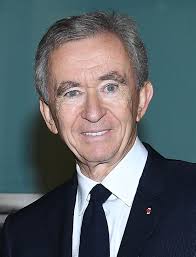
Bernard Arnault, whose LVMH Moët Hennessy Louis Vuitton conglomerate dominates the global luxury goods sector, faces steep odds in prediction markets assessing who will be the world's wealthiest individual by year-end 2026. The market currently prices his chances at just 1.1%, despite his historical position as one of the planet's richest people and the wealth-generating capacity of his luxury empire. The flat positioning of odds over the past 24 hours, combined with significant trading volume of $362,312, suggests the market has largely settled on this low probability as a baseline expectation rather than reacting to breaking news.
Why It Matters
Arnault's long-term status as either the world's richest or second-richest person has made him a fixture in wealth rankings since the early 2020s, with his position typically contested only by Elon Musk and Jef Bezos. However, the prediction market's dismissal of his 2026 prospects reflects the extreme sensitivity of billionaire wealth rankings to stock price fluctuations, particularly for individuals whose fortunes are heavily concentrated in single publicly traded companies. For Arnault, whose net worth is largely derived from LVMH's equity value, the stakes are material: luxury goods stocks are cyclically vulnerable to economic slowdowns and consumer spending shifts, while tech-dominated fortunes can experience different volatility patterns.
Key Factors
The market's assessment hinges on several interconnected variables. LVMH's stock performance relative to peers—particularly tech companies—will be decisive. Arnault's wealth is heavily indexed to luxury consumer demand, which tends to contract during economic downturns and is particularly sensitive to Chinese consumer behavior, a critical market for LVMH. Conversely, competitors like Musk benefit from exposure to artificial intelligence adoption and space technology narratives that market participants currently favor. Currency fluctuations also matter, as LVMH generates significant revenues in euros while dollar strength can affect relative wealth calculations. Additionally, wealth transfers, strategic asset dispositions, or major acquisitions by other billionaires could shift the relative rankings independent of Arnault's company performance.
Outlook
For Arnault to overturn the market's pessimism, LVMH would need to significantly outperform the broader market and specifically outpace the wealth growth of his primary competitors over the next two years. This would require sustained luxury consumer demand, particularly in Asia, and stable or appreciating multiples on luxury sector valuations. Market participants appear to view this scenario as unlikely given historical volatility in the sector and the current market preference for technology and AI-exposed assets. Any significant macroeconomic slowdown, particular weakness in Chinese luxury consumption, or sector rotation away from discretionary goods would likely reinforce the current low probability, whereas robust global economic growth and luxury sector outperformance would be necessary conditions to meaningfully shift the odds.