Market Overview
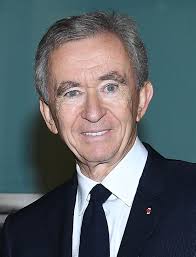
The prediction market pricing Bernard Arnault's chances of remaining the world's richest person on December 31, 2026, at just 1.1% reflects the remarkably fluid nature of billionaire wealth rankings. Despite currently holding the top position, traders have assigned near-negligible odds to Arnault retaining that crown over the next 18 months. With $362,312 in trading volume, the market shows genuine engagement with the question, even as the overwhelming consensus bets against the LVMH founder and chairman.
Why It Matters
The world's richest person designation carries symbolic weight in discussions of wealth concentration and corporate power, even as the ranking itself is inherently volatile. Arnault's position sits atop an estimated $211 billion net worth as of recent Bloomberg data, but that figure fluctuates daily with stock price movements. The ultra-low probability assigned to him suggests traders believe the distance to be closed is either very small or that billionaire wealth swings are large enough to make any year-end prediction highly uncertain. This market essentially captures investor expectations about not just Arnault's trajectory, but the competitive landscape among the world's wealthiest individuals.
Key Factors
Arthur's wealth is predominantly tied to LVMH Moët Hennessy Louis Vuitton SE, the world's largest luxury goods conglomerate. The stock's performance directly drives his net worth. Competing billionaires—particularly Elon Musk, whose wealth swings with Tesla and SpaceX valuations, and other tech-focused mega-billionaires—pose the primary challenge. Tech stocks have historically shown greater volatility than luxury goods stocks, creating asymmetric risk. A significant market correction in luxury goods or consumer spending could erode Arnault's position, while a tech rally could swiftly elevate rivals above him. Currency fluctuations also matter, as wealth rankings typically use dollar-denominated figures.
The 1.1% probability also reflects base rates: billionaire rankings shift frequently, and predicting exact positioning over 18 months in markets prone to sharp rallies and corrections is inherently difficult. The market's assessment suggests traders view multiple scenarios—including tech rebounds, market corrections, or currency shifts—as more likely than status quo preservation.
Outlook
For the probability to move materially higher, Arnault would need sustained outperformance of LVMH stock relative to competitors' stocks, or concrete signals that luxury goods demand remains resilient. Conversely, developments like significant tech sector rallies, LVMH underperformance, or broader market stress could push odds even lower by shifting expectations further away from Arnault's retention. The market will likely remain sensitive to quarterly earnings announcements from LVMH and major competing companies, as well as macroeconomic signals affecting both luxury consumption and tech valuations.