Market Overview
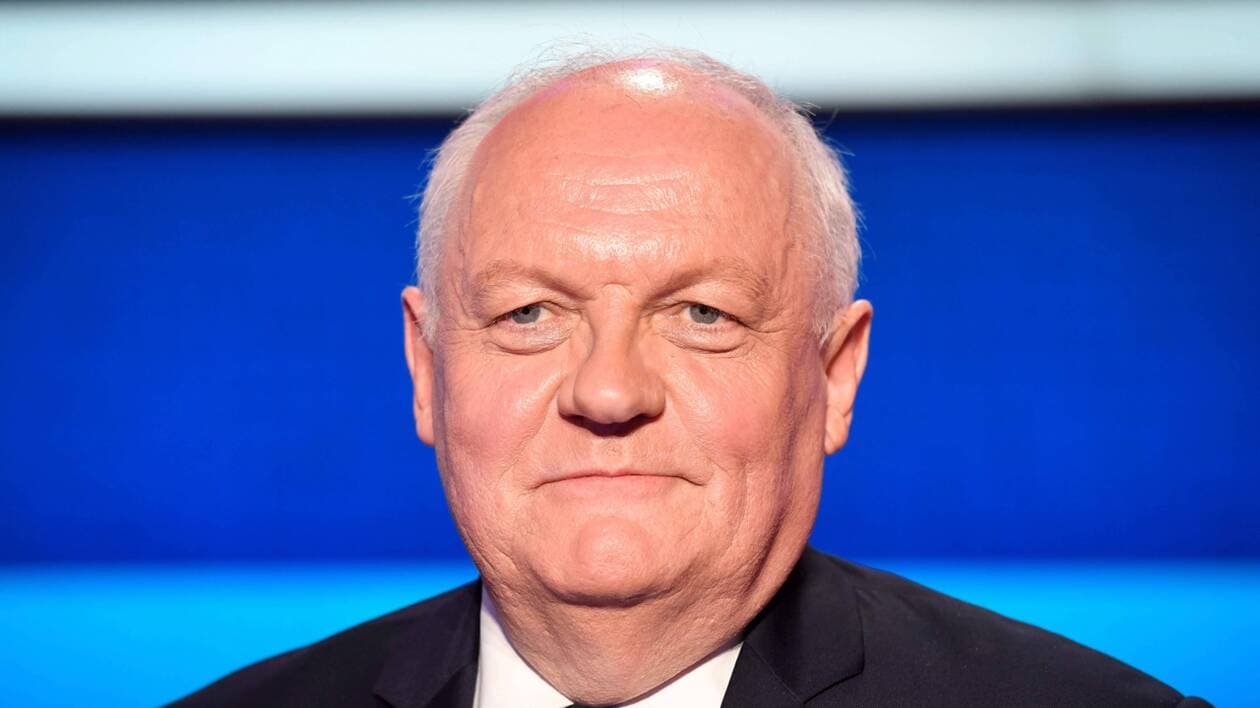
François Asselineau, founder and leader of the Union Populaire Républicaine (UPR), is priced at just 0.5% to win the April 2027 French presidential election according to prediction markets, with trading volume exceeding $2.9 million indicating substantial liquidity around this outcome. This probability has remained stable over the past 24 hours, suggesting no recent catalyst has shifted market sentiment. For context, a 0.5% probability is approximately equivalent to 200-to-1 odds, placing Asselineau in the extreme tail of possible outcomes rather than among credible contenders.
Why It Matters
Asselineau has pursued French politics for over a decade, establishing himself as a vocal Euro-skeptic and nationalist figure. However, his perennial candidacies have consistently failed to gain meaningful traction with voters. His 2022 presidential campaign garnered approximately 0.36% of the first-round vote, failing to reach the 5% threshold that would signal genuine political relevance in France's fragmented landscape. The prediction market's 0.5% assessment suggests traders view his 2027 prospects as marginally improved at best, but fundamentally constrained by historical performance and a crowded field of competing candidates across the political spectrum.
Key Factors
Several structural elements explain the negligible probability. France's two-round electoral system creates a high barrier to entry for candidates outside the mainstream left, center, and right blocs. Asselineau's niche platform—which emphasizes French withdrawal from the European Union and NATO—lacks the broad coalition-building potential necessary to advance beyond a first round typically dominated by major party nominees and established figures. Additionally, French voters have demonstrated a strong preference for major party candidates or charismatic insurgents with significant media presence; a perpetual also-ran struggles to capture imagination. The prediction market's pricing reflects these realities: reaching 50% of votes in a crowded first round, let alone prevailing in a two-candidate runoff, remains virtually implausible under present political conditions.
Outlook
For Asselineau's odds to materially improve, significant political realignment would be required—such as a transformative euro-skeptic movement capturing broader French discontent, or major scandals implicating mainstream candidates. Absent such upheaval, the 0.5% probability likely represents a floor reflecting only residual uncertainty in long-range forecasting. Market participants appear to view his candidacy as ceremonial rather than consequential for 2027's outcome.