What Happened
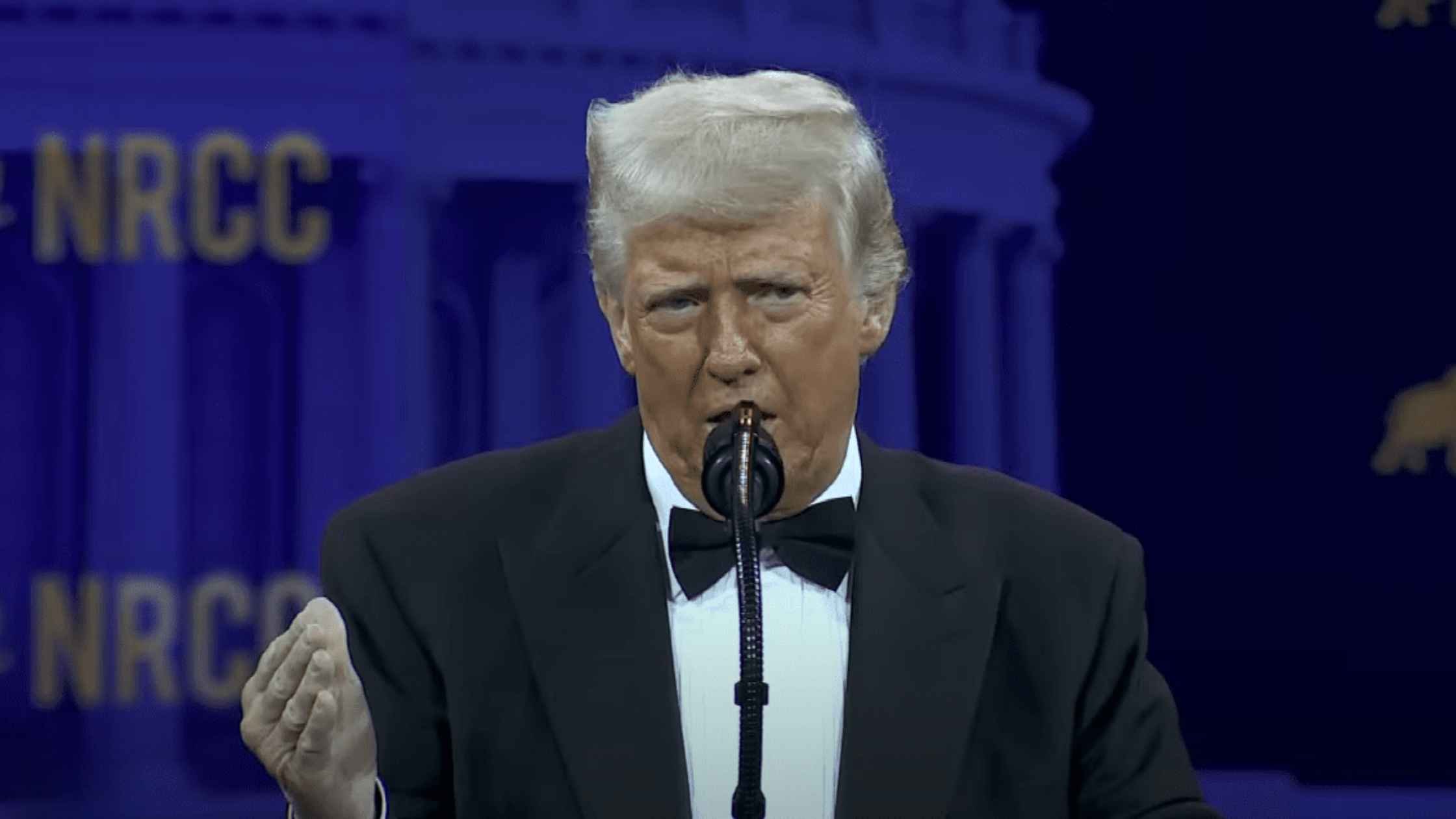
A prediction market tracking whether Trump will say \"cheat,\" \"cheater,\" \"cheated,\" or \"cheating\" at least 10 times during his scheduled keynote address at the National Republican Congressional Committee dinner on March 25, 2026, experienced a sharp 36.5 percentage-point rally. The contract moved from 23.5% probability to 60%, accompanied by $10,069 in trading volume. The market resolution criteria specify that plural and possessive forms count, as do instances within compound words, while the remarks must be broadcast or streamed live to qualify.
Why It Matters
The substantial shift in market pricing suggests traders and forecasters are substantially revising upward their expectations about the tenor and content of Trump's remarks at a major Republican National Committee fundraising event. The movement from roughly one-in-four odds to three-in-five odds represents a meaningful change in how political participants assess Trump's likely messaging strategy. This type of linguistic analysis, tracked through prediction markets, serves as a barometer for expected political rhetoric patterns and can signal anticipated thematic emphasis in high-profile political speeches.
Market Context
Prediction markets have become increasingly used as tools for assessing political expectations, including the specific content and messaging of public figures' statements. This particular contract's design—requiring a relatively high threshold of 10 instances of a specific word family—sets a precise, verifiable condition tied to broadcast remarks. The market's $10,069 trading volume, while modest, indicates active participation from bettors with viewpoints on either side of the proposition, with the recent momentum clearly favoring the affirmative case.
Outlook
Resolution will depend on the actual delivery and broadcast of Trump's remarks at the March 25 event. If the dinner proceeds as scheduled and is livestreamed or broadcast, the market will resolve based on an objective count of qualifying usage. Market participants now assign substantially higher probability to frequent deployment of election-integrity rhetoric centered on claims of cheating, though the 60% pricing suggests material uncertainty remains about whether the threshold will be met.