Market Overview
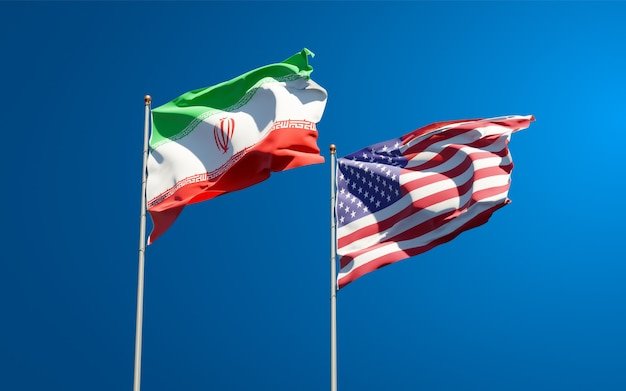
Prediction markets are currently assessing the probability of a publicly announced nuclear agreement between the United States and Iran by December 31, 2026, at 53.5%—essentially even odds. The market has held stable at this level over the past 24 hours, with cumulative volume reaching $861,792, indicating moderate but consistent participant interest. The near-50/50 pricing suggests traders see meaningful scenarios in both directions: either a diplomatic breakthrough or continued stalemate.
Why It Matters
A US-Iran nuclear accord would represent one of the most significant geopolitical developments in years, reshaping Middle East security calculations, sanctions regimes, and energy markets. The question encompasses not only a return to the 2015 JCPOA framework—abandoned by the Trump administration in 2018—but also any new bilateral or multilateral nuclear agreement. The resolution criteria are notably inclusive: any publicly announced mutual agreement qualifies, even if part of a multilateral deal, and resolution occurs upon announcement rather than implementation. This breadth means the market is sensitive to diplomatic signaling, framework agreements, or preliminary accords, not just final, comprehensive treaties.
Key Factors
Several dynamics are shaping the current assessment. The Biden administration pursued indirect negotiations through intermediaries in 2021-2022, bringing talks closer to conclusion than at any point since 2018, though no deal materialized. The incoming 2025 political environment introduces substantial uncertainty: a potential Trump administration return could shift US negotiating posture significantly, either toward stricter positions or alternative arrangements. Iran's own constraints—economic pressure, domestic political factional divisions, and advancing nuclear capabilities—create both urgency and obstacles. The 24-month window is neither trivial nor expansive; it allows time for sustained diplomatic effort but also represents a relatively near-term horizon given historical timelines for major arms control negotiations. Regional tensions, including Israeli-Iranian military incidents and proxy conflicts, create both pressure for de-escalation and complications for talks.
Outlook
The 53.5% probability suggests the market views the diplomatic door as genuinely open but not tilted toward a successful outcome. Movements in this market will likely track tangible signals: resumed indirect talks, public statements from new administrations, UN-broker meetings, or sanctions relief measures. Conversely, escalations, hardline rhetoric, or Iranian nuclear advances could shift pricing downward. The stability over the past day indicates no fresh catalyst has emerged, but the substantial volume suggests active reassessment as political transitions near. Traders will continue calibrating odds based on both diplomatic momentum and the structural incentive gaps that have historically stalled negotiations.