Market Overview
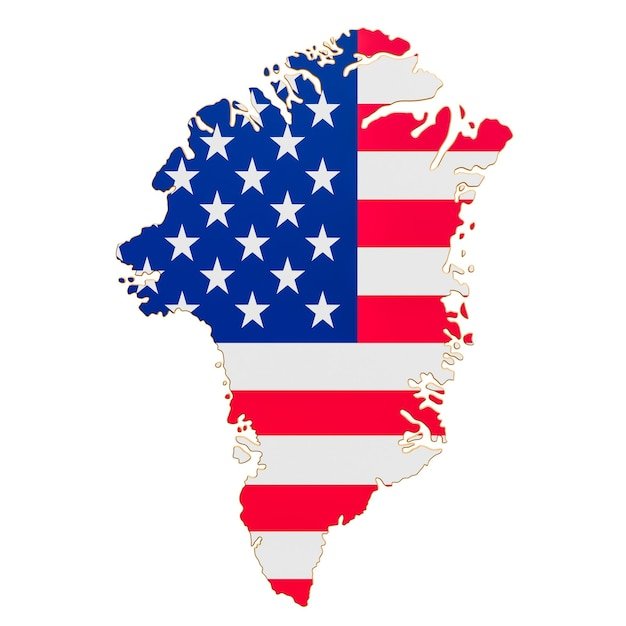
Prediction markets are pricing the likelihood of a U.S. acquisition of Greenlandic territory at 14%, with over $9.6 million in trading volume indicating sustained interest in the question. The probability has remained stable at this level over the past 24 hours, suggesting the market has largely priced in current information and political signals. The 14% figure represents meaningful but modest odds—roughly one-in-seven probability—indicating traders view the scenario as plausible under specific circumstances but not the base case.
Why It Matters
The question carries implications for Arctic geopolitics, transatlantic relations, and U.S. strategic positioning. Greenland's geographic location, natural resources, and military significance make it strategically valuable, particularly as Arctic access becomes more relevant. However, any U.S. acquisition would require Denmark and Greenland to formally cede or share sovereignty—an unprecedented step in modern geopolitics that would fundamentally reshape the political landscape across multiple nations. The market's 14% probability reflects acknowledgment that while recent diplomatic rhetoric has elevated the topic, structural and diplomatic obstacles remain formidable.
Key Factors
Several elements support the non-trivial 14% odds. Recent public statements by U.S. leadership have revived interest in Arctic expansion, including references to Greenland acquisition. The market's resolution criteria are deliberately broad, encompassing not only sovereignty transfer but also primary or exclusive U.S. jurisdiction arrangements—lower bars than outright annexation. This allows for scenarios such as military basing agreements resembling Guantánamo-style arrangements, which might be more diplomatically feasible than formal territorial acquisition.
Counterbalancing these factors are substantial headwinds. Denmark has repeatedly stated Greenland is not for sale, and Greenland's Home Rule government, which has self-governance authority, would need to consent to any arrangement. The timeframe is also compressed—achieving binding legal agreements on territorial matters within two years would require an extraordinary shift in Danish and Greenlandic policy. Historical precedent offers little guidance; no NATO ally has ceded territory to the U.S. in the modern era, and any such arrangement would face domestic political opposition in all three countries. International law and norms further discourage territorial acquisition in the 21st century.
Outlook
For the 14% probability to materialize into a \"Yes\" resolution, traders would need to see concrete progress toward a binding agreement—signed treaties, enacted legislation, or formal executive actions that establish U.S. control or sovereignty over defined Greenlandic territory. Non-binding diplomatic overtures, negotiations, or framework agreements would not qualify under the market's resolution criteria. The stability of odds at 14% suggests traders currently view the scenario as unlikely but not inconceivable, perhaps pricing in low-probability pathways such as geopolitical crises that might force Greenland or Denmark to seek U.S. security guarantees in exchange for control arrangements. Developments that could shift the market significantly include formal negotiation announcements backed by political will from all three governments, or major changes in Arctic geopolitical conditions.