Market Overview
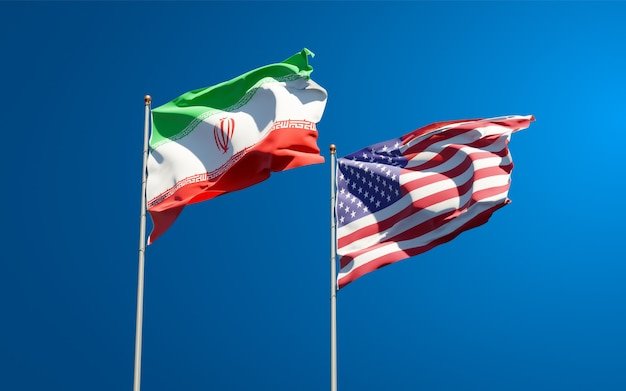
Prediction markets are assessing the likelihood of a formal US-Iran nuclear agreement by December 31, 2026, at 53.5%—essentially a coin flip with a modest lean toward \"yes.\" The market has remained stable at this level over the past 24 hours despite significant underlying geopolitical volatility, suggesting traders are balancing multiple competing scenarios rather than pricing in a clear directional view. With $861,792 in volume, the market reflects moderate but meaningful participation, indicating both investor interest and genuine disagreement about the probability.
Why It Matters
The prospect of a nuclear agreement between Washington and Tehran carries outsized implications for Middle Eastern stability, global energy markets, and US foreign policy. The 2015 Joint Comprehensive Plan of Action (JCPOA)—from which the US withdrew in 2018 under the Trump administration—represented the most significant diplomatic achievement on the Iranian nuclear question in decades. Any new agreement would require navigating not only technical nuclear safeguards but also the broader sanctions architecture, regional security concerns, and sharply divided domestic politics in both countries. The resolution window of roughly two years is notably compressed, creating time pressure that could either accelerate talks or render them infeasible.
Key Factors
Several structural factors support the \"yes\" case. The incoming Trump administration (as of 2025) has historically shown willingness to negotiate directly with Iran, and both sides have incentives: Iran seeks sanctions relief, while the US seeks to constrain Iranian nuclear advancement without military confrontation. The ~53.5% pricing suggests markets view negotiation as materially possible within the timeframe.
However, significant headwinds temper optimism. The mutual distrust accumulated since 2018 is substantial; Iran has advanced its nuclear program considerably in the interim, raising verification and compliance challenges. Domestic political opposition in both countries remains fierce—Republicans in the US largely oppose Iran deals, while hardliners in Tehran resist concessions. Regional proxies and US allies, particularly Israel and Gulf states, create additional diplomatic complexity. The absence of any reported active negotiations at present, combined with rhetoric from both sides emphasizing maximalist positions, suggests talks remain distant.
Outlook
The market's near-50/50 positioning reflects appropriate agnosticism given current conditions. Movement toward higher \"yes\" probabilities would likely require visible diplomatic engagement—statements from either government signaling serious negotiation intentions, back-channel talks surfacing in credible reporting, or appointment of senior negotiators. Conversely, escalation in regional tensions, further Iranian nuclear advances, or hardening rhetoric from either capital could shift odds lower. With nearly two years remaining, the window permits significant developments, but the current evenly balanced odds appropriately capture the profound uncertainty surrounding both the political will and technical feasibility of reaching agreement before the 2026 deadline.